
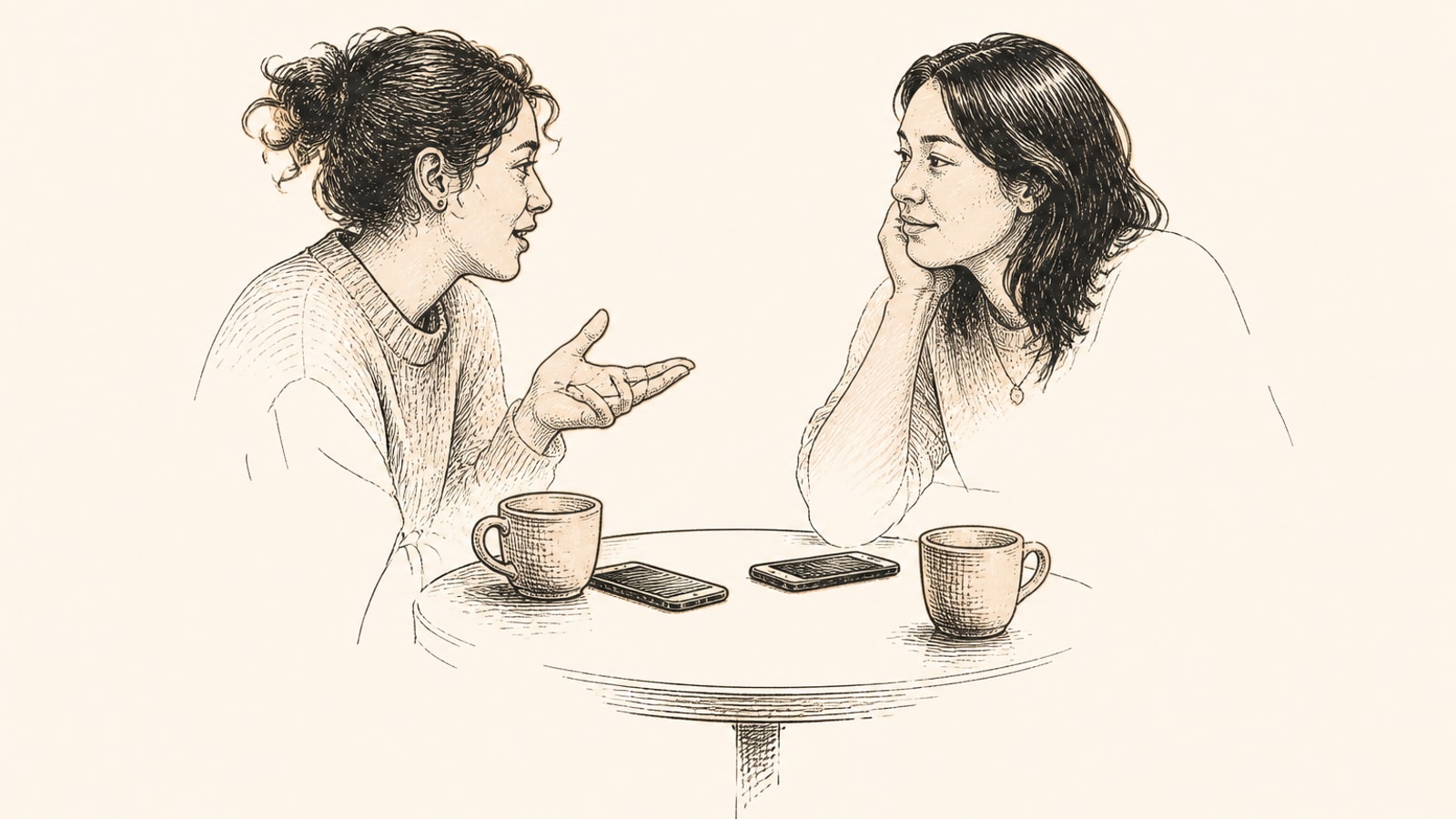
Ask around, and it is hard to find anyone who says the last few years have felt calm. Nearly half of American adults, 49%, now say they frequently feel stress, the highest share in more than two decades of Gallup’s asking (Gallup, 2024), and the list of pressures keeps lengthening: by 2025, 69% of adults named the spread of misinformation a significant source of stress and 57% pointed to the rise of AI, both up sharply in a single year (American Psychological Association, 2025). Anxiety and depression symptoms have risen alongside it, the strain runs from the paycheck to the pillow to the phone in a pocket, and it presses hardest on parents and the young. This report traces where American stress stands, what is fueling it, what it is costing families, and, in the same hard seasons, where people have long found steadiness.
Key Findings
- 49% of US adults report frequently feeling stress, a record across more than two decades of Gallup polling and a 16 point rise since the early 2000s (Gallup, 2024).
- Symptoms of anxiety rose to 18.2% of adults in 2022 from 15.6% in 2019, and symptoms of depression to 21.4% from 18.5%, on a nationally representative federal survey (National Center for Health Statistics, 2024).
- In 2025, 76% of adults named the future of the nation a significant source of stress, 69% the spread of misinformation, 62% societal division, and 57% the rise of AI, the last two up sharply in a year (American Psychological Association, 2025).
- 48% of parents said their stress felt completely overwhelming on most days, compared with 26% of other adults (US Surgeon General, 2024).
- Among weekly worship attenders, 33% of those with several close friends in their congregation were extremely satisfied with life, compared with 19% of those with none (Lim and Putnam, 2010).
How stressed are Americans now, and is it worse than before?
Frequent stress reached a two decade high in 2023, when 49% of US adults told Gallup they experience stress a lot of the day, up 16 points from the early 2000s and the most in Gallup’s trend (Gallup, 2024). The rise is not evenly shared: 53% of women reported frequent stress against 45% of men, and among younger women the increase since 2007 was 23 points, the steepest of any group.
Clinical symptom measures have moved the same direction. On the National Health Interview Survey, symptoms of anxiety rose to 18.2% of adults in 2022 from 15.6% in 2019, and symptoms of depression to 21.4% from 18.5% (National Center for Health Statistics, 2024). Self reported diagnoses have climbed too: 45% of adults ages 35 to 44 reported a mental health diagnosis in 2023, up from 31% in 2019 (American Psychological Association, 2023).
What is driving it?
Money, the wider world, and lost sleep sit near the center of it. In an American Psychiatric Association poll, 43% of adults said they felt more anxious than a year earlier, up from 37% in 2023 and 32% in 2022, and 77% said they felt anxious about the economy (American Psychiatric Association, 2024). Money ranks first among the day to day pressures: 43% of adults said money negatively affects their mental health, and 69% of them pointed to inflation and rising prices (Bankrate, 2025).
Sleep tracks closely with the strain. Americans now average 6.5 hours a night, 20% get five hours or less, up from 3% in 1942, and a record 57% say they would feel better with more sleep (Gallup, 2024). Among adults who want more sleep, 63% frequently feel stress, against 31% of those who sleep enough.
The screen is part of the picture as well. The US Surgeon General reports that adolescents who spend more than three hours a day on social media face about twice the risk of poor mental health outcomes, in a setting where 95% of teens use a social platform (US Surgeon General, 2023). Among adults, 36% say they check the news constantly (American Psychological Association, 2022), and 62% said they felt worn out by the sheer volume of campaign coverage in 2024 (Pew Research Center, 2024).
The information environment itself has become a named stressor. In 2025, 69% of adults called the spread of misinformation a significant source of stress and 57% pointed to the rise of AI, up from 62% and 49% respectively a year earlier, and 62% named societal division (American Psychological Association, 2025).
What is it costing us, at home?
The strain does not stay at the level of the individual; it reaches into households. On most days, 48% of parents said their stress felt completely overwhelming, compared with 26% of other adults, and 41% said they are so stressed they cannot function (US Surgeon General, 2024).
Money is the pressure most often felt inside a relationship. About 34% of partnered Americans named money a source of conflict with their partner, rising to 47% among those ages 18 to 24 (Ipsos, 2024), and 73% of married or cohabiting adults said financial decisions are ever a source of tension, with 47% of those saying it has touched intimacy (American Institute of CPAs, 2021). Wider tension takes a toll too: 32% of adults said the political climate had strained their own family, and 30% said they limit time with relatives who do not share their values (American Psychological Association, 2024).
At work, the cost shows up in hours and dollars. Gallup estimates that unplanned absences tied to fair or poor worker mental health cost the US economy about $47.6 billion a year, with affected workers missing nearly 12 days against 2.5 for others (Gallup, 2022).
Where do people tend to find steadiness?
In the same seasons, one pattern in the research has held up for years: people woven into a supportive community tend to report steadier lives. Among weekly worship attenders, 33% of those with several close friends in their congregation said they were extremely satisfied with life, against 19% of weekly attenders with no close friends there, an association the researchers traced to the friendships rather than to attendance alone (Lim and Putnam, 2010).
The pattern extends to the harder measures. Older adults who attend services report less loneliness, a link that runs through greater social integration and support (Rote, Hill, and Ellison, 2012). Across three large US cohorts, weekly attendance was associated with a 29% lower likelihood of depression over the following years (Chen, Kim, and VanderWeele, 2020). The protective association with depression is stronger for people going through a stressful stretch, consistent with community and practice serving as a resource under strain (Smith, McCullough, and Poll, 2003).
The direction is steady across decades of measurement: a few close friends, a shared table, a place to show up each week, and people tend to carry hard seasons a little better. What the numbers cannot say is what to do with a hard week of your own. For that, it helps to turn from what the research shows to what the teachings of Christ actually counsel, one pressure at a time.
When money is the weight
Money tops the pressures Americans tie to their own mental health, and it is the strain most often carried into a marriage (Bankrate, 2025; Ipsos, 2024). The teachings of Christ speak to it plainly, and not by promising more of it. Do not store up treasures on earth, Jesus says, and do not be anxious about your life, what you will eat or what you will wear (Matthew 6). The counsel is not carelessness but a reordering: steadiness is found less in the size of an account than in trust, in enough, and in open hands. Paul writes that he has learned, in plenty and in want, to be content (Philippians 4:11), and that godliness with contentment is itself great gain (1 Timothy 6:6).
Lived out in a hard month, that turns a private, sleepless worry into something shared and smaller. Naming money out loud with the person you share life with takes it out of the dark, where about a third of partnered adults admit they hide it (Ipsos, 2024). Giving a little, even when it is tight, is an old and strangely freeing practice, loosening money’s grip rather than tightening it.
One step this week: set a single honest, unhurried conversation about money with your spouse or a trusted friend, and choose one small amount to give away on a regular basis. A weekly pause from spending and striving, a kind of sabbath for the wallet and the mind, often does more good than another hour spent staring at the budget.
When the fear is the future
The pressures Americans name most are increasingly about what is coming: the future of the nation, the spread of misinformation, and the rise of AI, amplified by a habit more than a third describe as checking the news constantly (American Psychological Association, 2025, 2022). Here the teaching is almost stubbornly present tense. Do not be anxious about tomorrow, Jesus says, for tomorrow will be anxious for itself, and sufficient for the day is its own trouble (Matthew 6:34). The answer to a flood of dread is not more certainty about the future; it is attention placed on what is true and near.
Paul is specific about where to put a restless mind: whatever is true, whatever is honorable, whatever is lovely, think about these things, and the peace that follows will guard your heart (Philippians 4:8). Applied to a phone that never rests, that is permission to look away from the thousand things you cannot touch and toward the few you can.
One step this week: put a boundary on the intake, a set window for news and the phone kept out of the bedroom, and trade ten minutes of scrolling for ten of prayer or gratitude. Then give your energy to the one thing in front of you rather than the many you can only worry about.
When you are carrying it alone
More than half of adults said they feel isolated, and a similar share said that tension over division makes them less likely to reach for other people at all (American Psychological Association, 2025, 2024). This is the strain the teachings meet most directly, because they assume it was never meant to be carried alone. Bear one another’s burdens, Paul writes, and so fulfill the law of Christ (Galatians 6:2). The letter to the Hebrews urges a people not to neglect meeting together but to keep stirring one another up to love and good works (Hebrews 10:24). And where division is the wedge, the instruction aims smaller and truer than the abstraction that frightens us: love your neighbor, the actual one, and so far as it depends on you, live at peace with everyone (Romans 12:18).
That is also, quietly, what the data keeps pointing to: a few close friends and a place to belong. The move is toward people, not away from them.
One step this week: return to or seek out one regular gathering, a congregation, a small group, a standing table, and invite a single person to coffee with the phone face down. If someone comes to mind who has gone quiet, be the friend the research keeps describing, and reach out first.
Methodology and limitations
This report draws on established survey programs, official federal statistics, and peer reviewed research. The stress and anxiety figures come from Gallup’s annual stress polling and Negative Experience Index, the American Psychological Association’s Stress in America surveys, the American Psychiatric Association’s Healthy Minds poll, and federal instruments including the National Health Interview Survey and the Census Bureau and NCHS Household Pulse Survey. The community and wellbeing figures come from observational studies and panels, including the Faith Matters survey analyzed by Lim and Putnam, the National Social Life, Health, and Aging Project, and three prospective US cohorts analyzed by Chen and VanderWeele.
Several caveats apply. Most stress measures are self reported, and symptom screens such as GAD-7 and PHQ-8 indicate symptoms rather than a clinical diagnosis. Survey question sets change year to year, and some items, such as election year stressors, are tied to a moment rather than a permanent baseline. Estimates vary by instrument: short sleep, for example, is about 30.5% on the NHIS and closer to 37% on a different federal survey, because of survey mode and question wording. The NIMH lifetime anxiety figures rest on diagnostic interviews conducted in 2001 to 2003, so they are a clinical baseline rather than a current reading. The community and wellbeing findings are correlational; the studies adjust for many factors and, in the cohort work, measure practice before the outcome, but observational research cannot establish cause. Figures are current as of the latest releases cited and are worth checking against newer editions.
Conclusion
The plain question this report opened with has a plain answer: by the best available measures, Americans are carrying more stress than they were a generation ago. Frequent stress is at a two decade high, anxiety and depression symptoms have edged up, money and sleep and the pull of the screen weigh on daily life, and the strain reaches into marriages and falls heavily on parents.
Set beside that is a steadier finding, measured across many years and many studies: people embedded in a supportive community tend to fare better, and a few close friendships and a place to belong track with more satisfied, less lonely lives. The two portraits sit together without needing to be forced into one. A country under real pressure is also a country full of neighbors, tables, and congregations, and of people entirely able to show up for one another when it counts. None of the practices this report points to, an honest conversation, a boundary on the noise, a standing table, promises the pressure will lift, but each is a small, doable move toward steadiness. That is an ordinary kind of greatness, and it is within reach on any given week.
Frequently Asked Questions
How much more stressed are Americans than 20 years ago?
Frequent stress rose 16 points over roughly two decades to reach 49% of adults in 2023, the highest in Gallup’s trend (Gallup, 2024). The increase was steepest among younger women, up 23 points since 2007.
What stresses Americans the most right now?
In 2025, 76% named the future of the nation a significant source of stress, 69% the spread of misinformation, 62% societal division, and 57% the rise of AI (American Psychological Association, 2025). Money still ranks first among the pressures people tie directly to their own mental health (Bankrate, 2025).
Is anxiety really rising, or are people just more willing to talk about it?
Both self reports and standardized symptom screens have moved up: on the National Health Interview Survey, anxiety symptoms rose to 18.2% of adults in 2022 from 15.6% in 2019 (National Center for Health Statistics, 2024). Because that instrument is repeated and nationally representative, it captures more than a change in willingness to talk.
How is stress affecting families?
Parents report far more overwhelming stress than other adults, 48% against 26% on most days (US Surgeon General, 2024). Money is the pressure most often felt inside relationships, named a source of conflict by about a third of partnered adults (Ipsos, 2024).
Does sleep have anything to do with it?
Closely. Americans average 6.5 hours a night, 20% get five hours or less, and among those who want more sleep, 63% frequently feel stress, against 31% of those who sleep enough (Gallup, 2024). The relationship runs both ways.
Do people in religious communities report better mental health?
On average, yes, in correlational terms. Weekly attendance is associated with about a 29% lower likelihood of later depression across three US cohorts (Chen, Kim, and VanderWeele, 2020), and congregational friendships track with higher life satisfaction (Lim and Putnam, 2010). These are associations from observational studies, not proof of cause.
Sources
- American Institute of CPAs, 2021. Relationship Intimacy Being Crushed by Financial Tension. The Harris Poll for AICPA. Established survey program.
- American Psychiatric Association, 2024. American Adults Express Increasing Anxiousness in Annual Poll. Healthy Minds Monthly, Morning Consult. Established survey program.
- American Psychological Association, 2023. Stress in America 2023: A Nation Recovering from Collective Trauma. The Harris Poll for APA. Established survey program.
- American Psychological Association, 2024. Stress in America 2024: A Nation in Political Turmoil. The Harris Poll for APA. Established survey program.
- American Psychological Association, 2025. Stress in America 2025: A Crisis of Connection. The Harris Poll for APA. Established survey program.
- American Psychological Association, 2022. Media Overload Is Hurting Our Mental Health. APA Monitor on Psychology. Established survey program.
- Bankrate, 2025. Money and Mental Health Survey. SSRS for Bankrate. Established survey program.
- Chen, Y., Kim, E. S., and VanderWeele, T. J., 2020. Religious-service attendance and subsequent health and well-being throughout adulthood. International Journal of Epidemiology, 49(6), 2030 to 2040. DOI 10.1093/ije/dyaa120. Peer-reviewed.
- Gallup, 2022. The Economic Cost of Poor Employee Mental Health. Gallup Workplace. Established survey program.
- Gallup, 2024. US Daily Stress at Record High; Americans Sleeping Less, More Stressed. Gallup News. Established survey program.
- Ipsos, 2024. Money Fights: One in Three Partnered Americans Identify Money as a Source of Conflict. Ipsos for BMO. Established survey program.
- Lim, C., and Putnam, R. D., 2010. Religion, Social Networks, and Life Satisfaction. American Sociological Review, 75(6), 914 to 933. DOI 10.1177/0003122410386686. Peer-reviewed.
- National Center for Health Statistics (Terlizzi, E. P., and Villarroel, M. A.), 2024. Symptoms of Anxiety and Depression Among Adults: United States, 2019 and 2022. National Health Statistics Reports No. 213. Official statistic.
- National Institute of Mental Health, 2023. Any Anxiety Disorder. NIMH Mental Health Statistics. Official statistic.
- Pew Research Center, 2024. More Than Half of Americans Are Following Election News Closely, and Many Are Already Worn Out. Pew Research Center. Research institute.
- Rote, S., Hill, T. D., and Ellison, C. G., 2012. Religious Attendance and Loneliness in Later Life. The Gerontologist, 53(1), 39 to 50. DOI 10.1093/geront/gns063. Peer-reviewed.
- Smith, T. B., McCullough, M. E., and Poll, J., 2003. Religiousness and Depression. Psychological Bulletin, 129(4), 614 to 636. DOI 10.1037/0033-2909.129.4.614. Peer-reviewed.
- US Surgeon General, 2023. Social Media and Youth Mental Health: The US Surgeon General’s Advisory. US Department of Health and Human Services. Government data.
- US Surgeon General, 2024. Parents Under Pressure: The US Surgeon General’s Advisory on the Mental Health and Well-Being of Parents. US Department of Health and Human Services. Government data.